
Dongwook Go, PhD
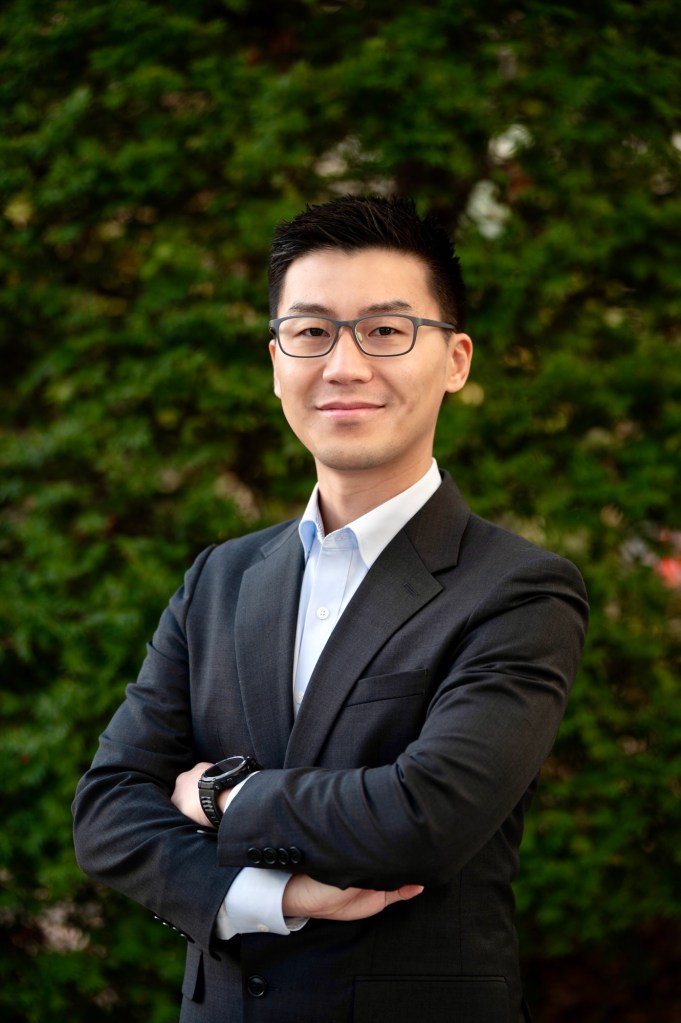
Principal Investigator
GO-Lab for Quantum Materials and Transport Theory
Assistant Professor
Department of Physics, College of Science, Korea University
Address: Room 206, Asan Science Building, Korea University
Anam-ro 145, Seongbuk-gu, Seoul 02841, Republic of Korea (South Korea)
Tel: +82-(0)2-3290-3102
Email: dongwookgo(at)korea.ac.kr
Short Bio
CV, ORCID, Google Scholar, ResearchGate
Academic experience
- From 2025: Assistant Professor
Department of Physics, Korea University, South Korea - 2020 – 2025: Postdoctoral Fellow (with Prof. Yuriy Mokrousov)
Institute of Physics, Johannes Gutenberg University Mainz, Germany
Peter Grünberg Institut, Forschungszentrum Jülich, Germany
Education
- 2019: PhD in Physics (supervised by Prof. Hyun-Woo Lee)
Thesis: Orbital Dynamics and Transport in Spintronics
Department of Physics, POSTECH, Republic of Korea (South Korea) - 2013: BSc in Physics (graduated with honor Magna Cum Laude)
Department of Physics, POSTECH, Republic of Korea (South Korea)
Awards and Honors
- 2025: POSCO Science Fellow, POSCO TJ Park Foundation
100 million KRW in research funding to conduct theoretical studies on the dynamics and transport phenomena of orbital quantum states in two-dimensional materials - 2025: Early Career Scientist Prize, International Union of Pure and Applied Physics (IUPAP)
On Commission on Magnetism (C9) for pioneering theoretical studies of the emerging field of orbitronics, which concerns the generation and transport of electron orbital angular momentum in solids
About Me
I am a theoretical physicist working in the field of condensed matter physics, recognized for pioneering contributions to orbitronics. My research focuses on understanding the quantum mechanical properties of angular momentum in nonequilibrium, including its generation, transport, relaxation, and interactions with other physical quantities, such as current-induced orbital accumulation and current, conversion between orbital and spin currents, and angular momentum transfer between electron’s spin and orbital angular momenta, lattice orders, and magnetic textures.
I theoretically showed robustness of the orbital Hall effect [PRL 121, 086602 (2018)], the effect predicted in mid 2000’s but was not widely accepted for its fragility in crystals. Following my prediction that the orbital Hall effect is gigantic in light metals such as Ti, it was experimentally confirmed in [Nature 619, 52 (2023)]. Additionally, I proposed the concept of orbital torque—magnetization dynamics driven by nonequilibrium processes [PRR 2, 013177 (2020); PRR 2, 033401 (2020); PRL 130, 246701 (2023)]—which has since been validated through multiple experiments [PRL 125, 177201 (2020); NatComm 12, 6710 (2021); NatPhys 20, 1896 (2024), etc.]. Recently, my colleagues and I demonstrated terahertz radiation arising from ultrafast dynamics [NatNano 18, 1132 (2023)] and introduced the concept of ‘orbital pumping’ [NatElec 7, 646 (2024)], the reciprocal effect to orbital torque.Nowadays, orbitronics has emerged as a pivotal research area in condensed matter physics due to its crucial implications for quantum transport, correlated phenomena, and geometric and topological effects. They manifest in versatile material platforms, including two-dimensional materials, topological matter, unconventional magnets, oxides, multiferroics, and superconductors. Nonequilibrium orbital angular momentum and its associated currents, once thought unattainable in solids, now offer novel tools for probing and controlling hidden complex orders, their dynamics, and the transport of their elementary excitations.
The physical principles underlying the generation, detection, and manipulation of nonequilibrium orbital angular momentum and related variables hold promise for developing next-generation devices. Orbitronic technologies could address limitations of conventional electronics, offering advantages in operation speed, manufacturing costs, environmental impact, and energy efficiency.
In my research, I place great importance on bridging theoretical physics with real materials and experimental observations. This involves developing general theoretical frameworks, performing first-principles calculations for real materials, and collaborating closely with experimentalists. While my expertise is centered around condensed matter theory and first-principles calculations, my ultimate goal is to uncover fundamental principles and apply them to device technologies. I am deeply interested in exploring novel materials and innovative experimental techniques. Please feel free to reach out to discuss potential collaborations!
 Spintronics, Orbitronics, and Physics Beyond